
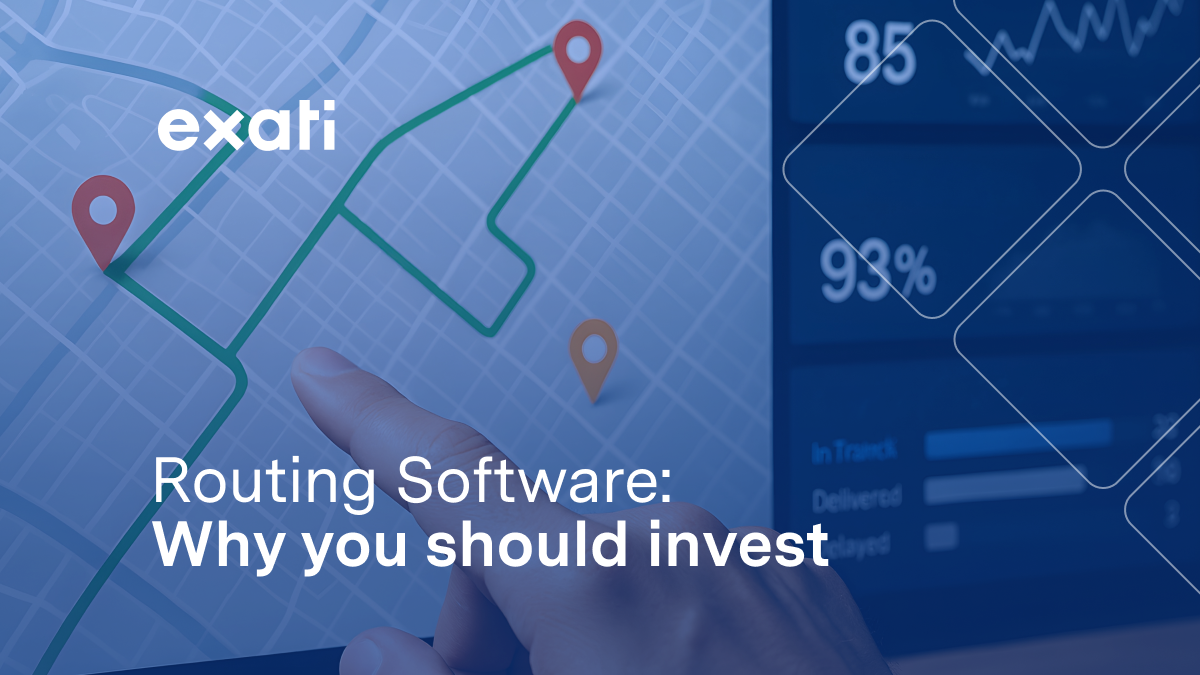

Digital transformation in the logistics and field-operations sector is no longer a buzzword — it’s a must-have for companies and public managers looking to boost efficiency and cut costs. With the help of routing software, route planning stops relying on manual processes and becomes optimized by intelligent systems that provide greater control and real-time visibility of the operation.
This type of tool is especially important as cities expand and the demand for fast, high-quality public services increases. In smart cities and in a highly competitive market, route optimization becomes a core strategic asset for delivering urban infrastructure and facilities services.
In this article
- What Is Routing Software?
- How does Routing Software work in practice?
- Key features of effective Routing Software
- Advantages of using Routing Software
- Challenges to consider when implementing the system
- The Smart City Solution: Exati AI Route Planner
What Is Routing Software?
Routing software is a solution that plans and optimizes routes by analyzing historical travel data and multiple operational parameters to define the most efficient paths. The system considers distance, estimated travel time, traffic conditions, and other variables to build optimal routes.
With the support of Artificial Intelligence, the platform also factors in peak-hour patterns, road obstacles, and weather forecasts to ensure that the proposed route is the fastest, safest and most cost-effective, reducing travel time and maximizing productivity.
How does Routing Software work in practice?
Imagine your public lighting team, which needs to perform maintenance across several locations throughout the day.
With routing software, all task locations are entered into the system. In seconds, it calculates the best route sequence for each field team. This eliminates manual planning, saves time and resources, and ensures each task is executed as efficiently as possible.
To do that, the platform continuously analyzes real-time data, taking into account street conditions, technician availability, vehicles, inventory, and service priority levels.
If urgent requests arise or unexpected events occur — such as storms or road blockages — the system automatically re-optimizes routes to keep operations flowing and avoid service interruptions. Field teams are monitored in real time and receive updated itineraries directly on their mobile devices.
Key features of effective Routing Software
A high-performance routing tool should include features that ensure flexibility, speed, and operational control, such as:
- Real-time tracking – To monitor the location of each vehicle or field team throughout the day.
- Fast re-optimization – To quickly recalculate routes when demands change or new priorities emerge.
- Customization – To adapt the tool to the organization’s segment and operational nuances.
- Seamless integrations – With existing management systems, ensuring route planning is always fed by up-to-date data.
- Automated reporting – For evaluating route efficiency and service performance, supporting continuous improvement and better decision-making.
Advantages of using Routing Software
The benefits go well beyond simply planning better routes:
- Lower operational costs: Optimized routes reduce travel time, fuel consumption, toll expenses, and equipment wear — lowering accident risk as well.
- Higher productivity: Teams spend less time in transit and more time performing activities. Manual route planning becomes unnecessary, freeing staff for strategic tasks.
- Better citizen experience: Timely, consistent public services strengthen trust in municipal management.
- Reduced environmental impact: Fewer unnecessary trips mean fewer emissions — key for smart cities focused on sustainability.
Challenges to consider when implementing the system
Even with clear benefits, adopting a routing solution requires attention:
- The system must integrate well with existing software to avoid outdated or inconsistent data.
- Teams need proper training to use the platform effectively.
- Although the initial investment may seem high, the ROI typically comes quickly thanks to productivity gains and reduced operational expenses.
The Smart City Solution: Exati AI Route Planner
A leading example of advanced routing technology for public management is the Exati AI Route Planner.
Powered by AI, real-time monitoring, and automated reports, the platform supports planning and executing routes for urban-services operations such as street lighting, waste management, and city maintenance.
With one-time configuration and automatic route generation, the system makes the operation faster and more economical — helping reduce planning time by up to 70% and fuel costs by up to 30%.
The Exati AI Route Planner also automates work-order dispatching, prioritizes urgent tasks, and sends service information directly to the smartphones of field teams.
Conclusion
Automated routing is essential for modern management of urban infrastructure and service delivery. For cities and companies aiming to operate with excellence, investing in routing software means cutting costs, increasing team efficiency, and offering a better experience to citizens and clients.



Stay connected