


Sustainable cities represent an innovative response to the environmental, social, and economic challenges faced by urban areas. Unlike municipalities that prioritize economic growth at the expense of the environment, these locations seek a balance between development and preservation.
In this article, we will address the concept of sustainable cities, present examples from around the world, and highlight the characteristics of smart cities.
In this article
- What Are Sustainable Cities?
- What is the Difference Between Sustainable Cities and Smart Cities?
- Examples of Sustainable Cities Around the World
- The Future of Sustainable Cities
What Are Sustainable Cities?
Sustainable cities are those that implement practices and policies aimed at minimizing environmental impact, promoting social equity, and ensuring economic viability.
These locations utilize resources efficiently, adopt clean technologies, and create environments that encourage citizen participation. The central idea is to ensure that the needs of the current population are met without compromising the ability of future generations to meet their own needs.
What is the Difference Between Sustainable Cities and Smart Cities?
Although the terms “sustainable cities” and “smart cities” are often used interchangeably, it is important to highlight the differences between them:
Sustainable Cities
Sustainable cities prioritize practices that ensure environmental preservation and social equity, regardless of the technologies used. While a smart city can incorporate elements of sustainability, not every sustainable city is necessarily smart. The ideal is for these two approaches to complement each other, creating well-planned urban environments.
These municipalities align their standards of living and consumption with an approach that integrates economic and socio-environmental aspects.
Instead of promoting disorganized growth, they adopt public policies and initiatives that generate positive impacts on society and the environment. This involves actions in areas such as mobility, energy matrix, education, and waste management.
Sustainability is a collective goal, essential for the future of humanity, as consumption habits have led to the exhaustion of natural resources and the destruction of biodiversity, driving the climate crisis. Thus, these locations seek to restructure their urban centers to avoid environmental degradation and ensure a habitable environment for future generations.
For this to occur, their public policies must cover diverse areas, such as education, health, culture, housing, and transport, promoting public spaces that encourage health and productivity, in addition to attracting investment for sustainable economic development.
Smart Cities
Smart cities utilize Information and Communication Technologies (ICT) to improve the efficiency of urban services, such as transport, energy, and waste management. However, their essence goes beyond the simple application of technology. They are planned to promote the well-being of citizens, prioritizing social inclusion and the reduction of inequalities, in addition to fostering sustainability.
According to the Ministry of Regional Development (MDR), smart cities operate in an innovative and inclusive manner, promoting digital literacy, governance, and collaborative management. They employ technology to solve real problems, generate opportunities, provide efficient services, and increase resilience.
Thus, a smart city should be seen as an ecosystem where technology enhances the quality of life and promotes balanced and sustainable urban development.
Examples of Sustainable Cities Around the World
1. Freiburg, Germany
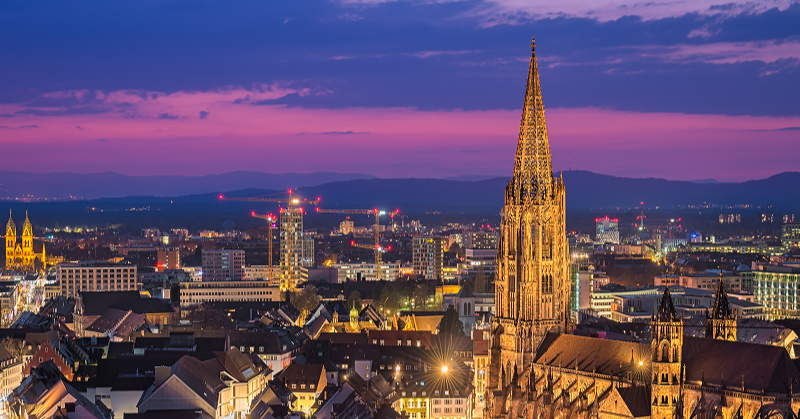
Freiburg, a German city with about 220,000 inhabitants, is recognized for its commitment to sustainability, being considered Germany’s “environmental capital.” Since the 1960s, Freiburg has implemented an environmental agenda that restricts vehicle traffic in the city center, prioritizing pedestrians, bicycles, and public transport.
The local sustainable transport strategy is based on limiting car use, offering efficient transport alternatives, and regulating land use to encourage walking and cycling. Freiburg also preserved its light electric rail network, improving air quality and reducing noise, while operating on clean energy.
With an urban center adapted for pedestrians, it saw a 50% increase in public transport use and a 100% growth in bicycle traffic, while car use remained virtually unchanged at 1% over 15 years.
2. Vancouver, Canada
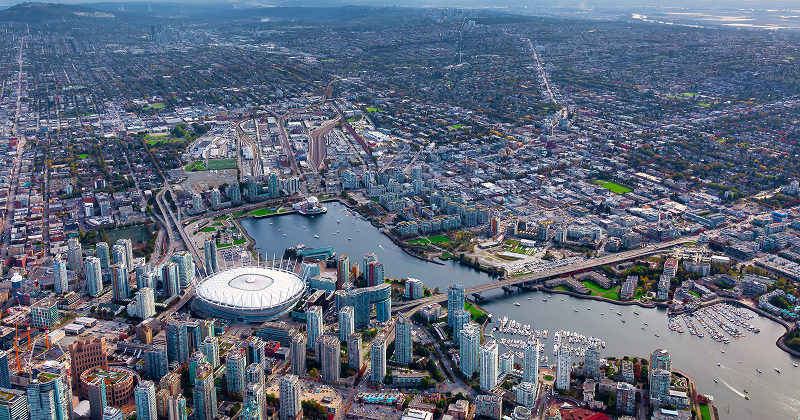
Vancouver, located on the west coast of Canada, is recognized for its commitment to sustainability and environmental preservation. With the goal of becoming the world’s greenest city, the region adopts various initiatives to reduce its ecological impact.
Noteworthy is its vast network of over 200 parks, which improve quality of life and regulate the climate, in addition to promoting the use of bicycles and public transport, decreasing dependence on cars and greenhouse gas emissions.
Vancouver’s sustainability strategy includes the production of clean energy through renewable sources, such as hydroelectric, wind, and solar power. The city also invests in technologies to increase the energy efficiency of buildings and manage waste, with robust recycling and composting programs.
This combination of public policies and strong environmental awareness makes Vancouver an inspiring model for other cities around the world.
3. Sydney, Australia
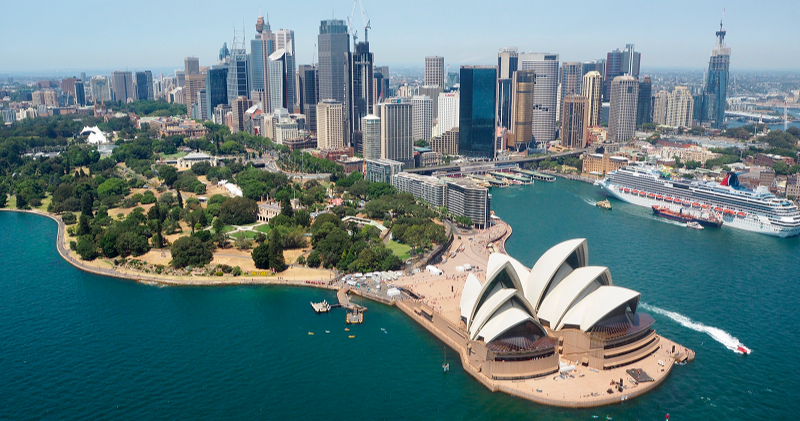
Sydney stands out as a metropolis that harmonizes its natural beauty with a growing commitment to sustainable practices. Its population seeks a balance between urban life and environmental protection, resulting in the implementation of various sustainability initiatives.
The city encourages the use of public transport and promotes active mobility, such as walking and cycling. There are also recycling and composting programs in effect, aiming to reduce the amount of waste destined for landfills.
Urban revitalization projects also emphasize the importance of sustainable public spaces that promote biodiversity and community interaction. With a clear vision for a sustainable future, Sydney stands out as a leader in environmental initiatives, serving as inspiration for other cities globally.
4. Oslo, Norway

Oslo is one of the world’s most sustainable cities, with the goal of becoming carbon-neutral by 2050. The Norwegian capital invests in eco-friendly public transport, with an extensive network of buses, trams, and electric trains powered by renewable energy.
To promote sustainable mobility, Oslo expanded its bike lanes and implemented measures to improve air quality, such as banning fossil fuel vehicles from the city center and incentivizing the use of electric vehicles.
In addition to reforestation and conservation initiatives, Oslo recycles over 90% of its waste and converts the remainder into energy or compost, while promoting campaigns to reduce waste generation. With over 50% of its area covered by parks and forests, the city preserves its green spaces, providing a healthy environment for everyone.
5. Curitiba, Brazil

Curitiba, the capital of Paraná state, is often referred to as an example of a sustainable city, recognized for its innovative urban policies and emphasis on sustainable mobility. With about 70% of the population using public transport, the capital stands out for its Bus Rapid Transit (BRT) collective transport system, which is one of the most efficient in the world.
This system integrates different transport modes and prioritizes bus use, which decreases reliance on private vehicles and, consequently, reduces carbon emissions.
Furthermore, Curitiba is famous for its extensive green areas, with parks and gardens covering a significant part of its territory. Examples like Barigui Park and the Botanical Garden not only offer leisure options but also improve air quality and serve as habitat for local fauna.
An important point of sustainability in Curitiba is its recycling program, one of the most comprehensive in Brazil, which includes a selective collection system and awareness campaigns. The city, which boasts 51 square meters of green areas per inhabitant, reflects a strong commitment to biodiversity conservation.
The Future of Sustainable Cities
Sustainable cities are more than a trend; they are an urgent necessity in a world facing constant change. Governments must implement policies that prioritize sustainability, integrating smart technologies and ecological practices.
The examples of cities we brought in this article demonstrate that it is possible to build urban environments that respect the environment and promote the quality of life. By joining efforts between technological innovation and sustainable practices, we can create cities that not only meet current needs but also pave the way for a more sustainable future.



Stay connected